Infographics
I have created infographics on subjects that are interesting to me. I hope your enjoy them.
| Jesus Christ | Scriptures | Mormon Battalion | Kids |

|
|
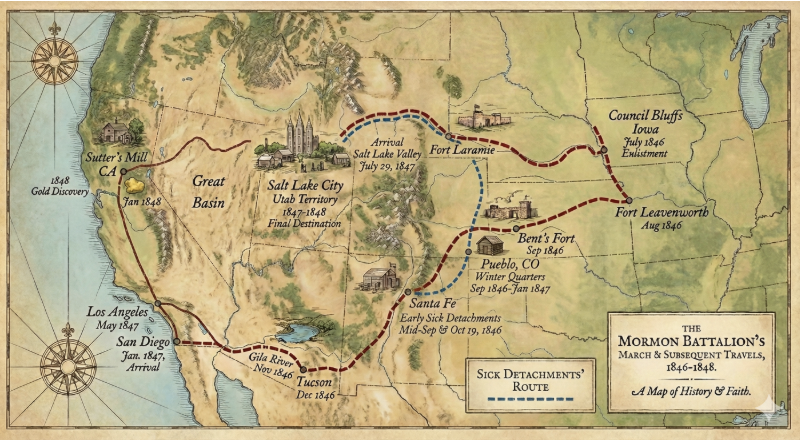
|

I have created infographics on subjects that are interesting to me. I hope your enjoy them.
| Jesus Christ | Scriptures | Mormon Battalion | Kids |
|
|
|
|
James C. Sly a Mormon pioneer, was born on 8 Aug 1807 in Sodus, Wayne, New York. He served as member of the Mormon Battalion in [1], scout for early west trails[2] used during the California gold rush, journal keeper in 1848 and 1849, early US western settler of several communities, served on to missions to Canada, was accidentally wounded outside Fort Levan early in the Utah Black Hawk War. He died on 31 Aug 1864 in Chicken Creek, Juab, Utah. He was buried in 1864 in Chicken Creek, Juab, Utah, USA.
AWSTATS is an Apache log file analyzer that will show details about traffic to your web sites.
Setting up awstats guide
now run the awstats.pl script:
% cd /usr/share/awstats/wwwroot/cgi-bin/

% sudo perl awstats.pl -update -config=mysite
If all goes well, you should see something along the lines of:
Found 0 dropped records

Found 0 corrupted records,

Found 150 old records,

Fount 50 new qualified records.
…at the end of the update script output.
So, to do this with multiple domains, just repeat the steps above, making sure to make the appropriate changes to each domain…
This will hopefully create a config file fore each of your domains in /etc/awstats with the name awstats.web3us.com.
You should now be able to visit www. yoursite.ext/awstats/awstats.pl?config=mysite and you’ll see the fruits of your labor. I chose not to allow web users to do automatic updates. Rather, I have a cronjob set to run the awstats.pl -update script a once per day
(I don’t administer any high-traffic sites, so it’s not critical to have the most up-to-date records). You can see near the end of my Incremental backups with rsync post for more information on that, if you’re interested.