Fedora Install and configure tips

I like to start by following these guides, with a few short cuts and additions:

The Perfect Desktop - Fedora i686 (GNOME)

This is a great screen by screen guide to help you download and install Fedora

easyLife

After installing Fedora 14 the big short cut is to use easyLife, download and install easyLife for Fedora here.  This provides one application that you can use to add all the "not completly opensource" stuff you really need to make Fedora useful.  Things like the following list are just a couple of clicks away:

  • Sets "sudo" command up for your regular user;
  • Configures RPMFusion repository for extra and non-free software;
  • Installs Flash Player plugin;
  • Installs all kinds of Codecs (h264,divx,xvid,mp3 etc);
  • Installs nvidia drivers;
  • Installs Skype;
  • Installs Sun Java and Sun Java Plugin for Firefox;
  • Integrates Sun Java with system-switch-java;
  • Installs Google apps (Picasa, Desktop);
  • And many others...

GUI Administration Tools

For some reason several items I am used to having needed to be added manualy to this Fedora release.  For example to use graphical tools for administration I had to run the following commands and then choose 'y' to install the GUI utility.

To allow the starting stoping and configuring of services:

system-config-services
Subject

Which is better #Fedora 13 or #Ubuntu 10.04

The state of the Linux desktop

I'm a fan of Fedora and Ubuntu, but for different reasons. Fedora, while unpolished, is a solid distro for adventurous Linux users and developers who want to be on the bleeding edge. Power users deserve a good distro that is usable and feature-complete without a lot of polish or distraction - and that's what Fedora is.
Ubuntu is the flip side. It's very polished, closing in on Apple in terms of usability and applications. It's not quite there yet, but getting closer and certainly a persuasive distro for people switching from Windows. If you're looking to get a friend started with Linux, don't hesitate to begin with Ubuntu.

Benchmarks for Graphics

Published on June 02, 2010
Written by Michael Larabel

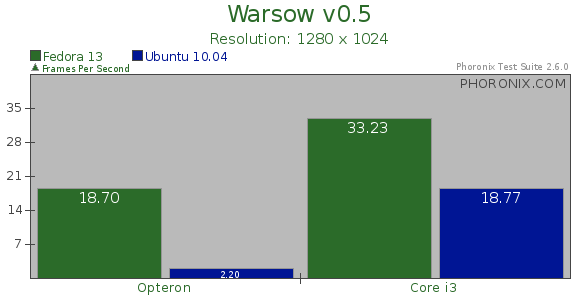
When running the Warsow gaming test, both the Intel and Radeon graphics had favored Fedora 13 over Ubuntu 10.04 LTS. The Mesa stack found in Ubuntu 10.04 LTS has a bug with Warsow where its frame-rate is consistently low (2~3 FPS) with the Radeon R600/700 ASICs, but this has since been resolved and is fine with Mesa 7.8.1 in Fedora. Improvements in the Clarkdale graphics performance with the Fedora 13 packages led to its frame-rate being 77% higher than under Ubuntu's Lucid Lynx.

Subject

rsync

You use rsync in the same way you use rcp. You must  specify  a  source and a destination, one of which may be remote.

rsync -avz foo:src/bar /data/tmp

rsync -av /var/samba/ server:/opt/samba  # no compression
 

Subject

Find and grep

grep command syntax

grep "text string to search" directory-path
Examples

To search for a string called redeem reward in all text files located in /home/tom/*.txt directory, use

$ grep "redeem reward" /home/tom/*.txt

To recursively search for a text string all files under each directory, use -r option:

$ grep -r "redeem reward" /home/tom

find command syntax

$ find path expression

Using the command line, you can search for files larger than a given filesize using

$find path -size +1024k

$find path -size +5M -print

Note the -print is the default and assumed

Using the command line, you can search for files with name

$find path -name '*.AVI'

Find all files with the name program.c starting at root directory (i.e / directory)

$ find path -name 'program.c' 2>/dev/null

$ find path -name 'program.c' 2>errors.txt

Note : 2>/dev/null  in case any error messages '2' pop up simply send them '>' to /dev/null i.e. simply discard all error messages.

Subject